Capturing Data on the Frontier
By Creator Fund | May 26, 2026
Creator Fund has led a pre-seed into Latent Worlds in Delft, as the robotics company emerges from stealth.
Large Language Models trained on all the text of the internet. However, no ready made dataset exists for the natural world.
As we send robots to protect the depths of the ocean, to autonomously fly through the sky, to run our factories, how do we train them? Machines learn from clean and structured data. But the real world is noisy.
Latent Worlds captures data on the frontier. At the wildest parts of our world, where it is hardest for machines to operate. This is where internet connection fails, where compute is constrained, and where weather breaks down well constructed hardware.
Latent Worlds’ Platform
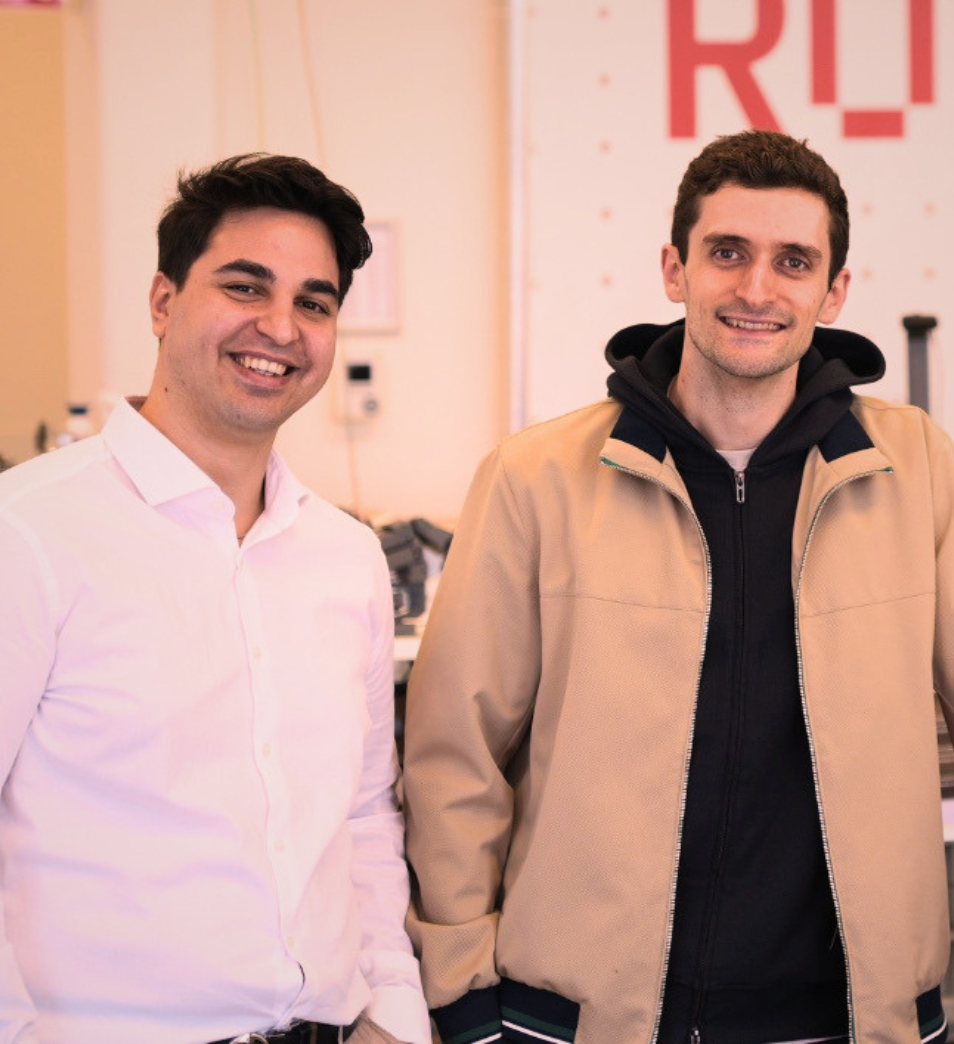
It is led by Cris Meo, a PhD student in World Models, and Google software engineer Alejandro Noel. Both obsessed with robots, both saw their uselessness without data. They founded Latent Worlds in Delft out of the research in Cris’ degree.
Everything starts with data. Everything depends on data. Latent delivers stable, buffered uploads in the most challenging conditions.
Data is temporarily stored locally on device so nothing is lost if the connection drops, the Latent Worlds system automatically slows down or queues data if the server cannot keep up, and the platform has autonomous prioritisation so the most important data is sent first.
This is matched with tagging so that the data is recorded with context about location, time, conditions, and environment. For example, a drone can continuously stream perception data to the cloud, where it is automatically tagged with relevant context e.g. the altitude or weather conditions that the drone was operating in. This enriched and labelled data accelerates how much the robots and humans can learn, so the operator now knows “the drone began to lose stability, and it was flying at X height, at X temperature, and Z speed.”
Like many great scientists, Cristiano was hard to reach. Very hard. Multiple messages from us went unanswered. Until, finally our PhD in Delft simply showed up unannounced at his office door and knocked. Cristiano works in a skyscraper with no directory and so it involved a lot of trial and error.
We were impressed by everything we heard and we completed the deal within three weeks.
Someone will build the infrastructure that allows robots to learn on the edge. Others are trying to do this in the US and elsewhere in Europe. However, most companies are building the data visualisation and analytics piece first and focusing on the UX and analysis tools. Cristiano’s view (and ours too) is that the focus should be on the data capture first.
If robots cannot capture data, they will never learn. And the places where we most need robots are frontier environments where data is hardest to capture. Latent will establish itself at the edge and be the foundational data layer that enables robots to operate, learn, and improve anywhere.